
When it comes to CNC pipe cutting, the quality of the cut affects much more than how the finished part looks. Poor cut quality can lead to additional grinding, longer fit-up times, wasted material, and unnecessary rework.
The good news is that small adjustments to your cutting process can make a significant difference. From consumable selection to torch height and cutting speed, understanding the fundamentals can help your shop produce cleaner parts and maintain more consistent results.
Why Cut Quality Matters
A clean, accurate cut helps keep every step that follows moving efficiently. When parts come off the machine with excessive dross, inconsistent edges, or inaccurate dimensions, your team has to spend additional time correcting those problems before fabrication can continue.
Improving cut quality can help your shop:
- Reduce secondary grinding and cleanup
- Improve part fit-up
- Produce more consistent parts
- Reduce unnecessary rework
- Keep production moving efficiently
The goal isn’t simply to create a better-looking cut. It’s to create a more repeatable fabrication process from the first cut through final assembly.
1. Start With the Correct Consumables
Consumables play an important role in plasma cutting performance. Worn, damaged, or incorrectly selected consumables can affect arc stability and ultimately impact the finished edge.
Before beginning a job, make sure the nozzle, electrode, shield, and other components are appropriate for the material and amperage being used.
Regular inspection is equally important. Waiting until a consumable completely fails can lead to inconsistent cuts and unnecessary downtime.
Shop Floor Tip
Keep a record of the consumable combinations that work best for your most frequently cut materials and thicknesses. Creating repeatable setups can make it easier for operators to achieve consistent results from job to job.
2. Verify Torch Height
Torch height can have a major impact on cut quality.
If the torch is positioned too high or too low, you may experience excessive bevel, dross, poor edge quality, or inconsistent cuts.
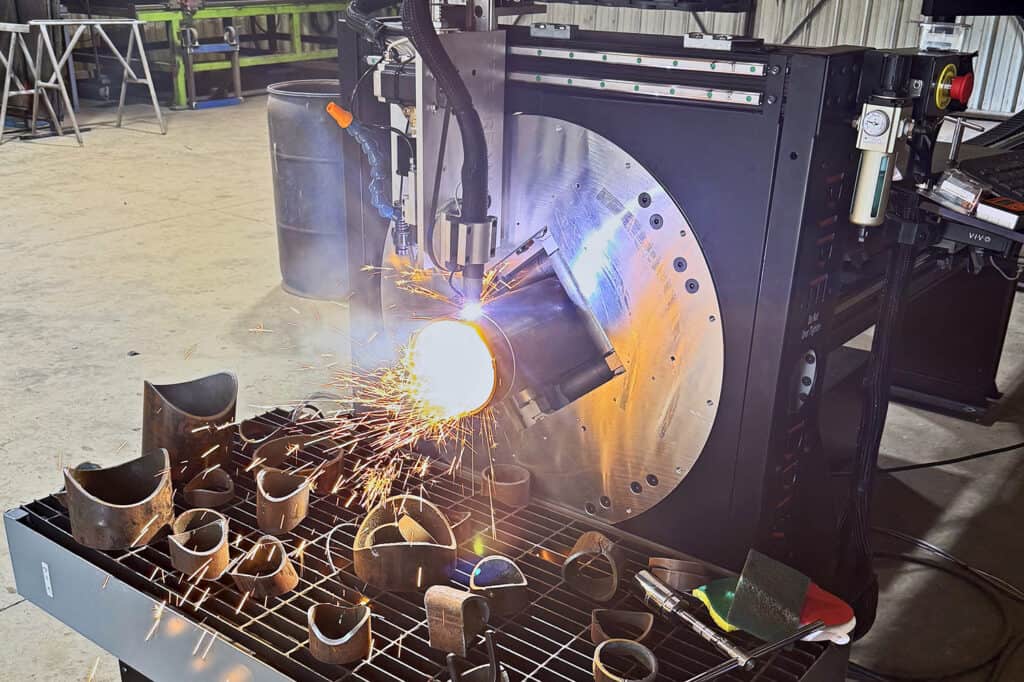
Maintaining the proper distance between the torch and material helps the plasma arc perform as intended throughout the cutting process.
Automated torch height control can also help maintain a more consistent cutting distance, particularly when working with material that isn’t perfectly straight.
3. Check Cut Speed and Amperage
Faster isn’t always better.
Cutting too quickly can prevent the plasma arc from fully penetrating the material. Cutting too slowly can introduce excessive heat and create additional dross.
The same principle applies to amperage.
Start with the recommended parameters for your material type and thickness, then fine-tune the settings based on your specific machine, plasma system, and application.
Once you find a combination that consistently produces good results, document it.
4. Keep Your Machine Properly Maintained
Even the best cutting parameters won’t compensate for a poorly maintained machine.
Routine maintenance helps ensure the mechanical and cutting systems continue operating consistently.
Pay attention to components such as:
- Torch consumables
- Rails and linear motion components
- Material supports
- Cable connections
- Air supply
- Plasma system
- Torch alignment
A preventative maintenance routine can help identify small problems before they turn into larger production issues.
5. Use Automation to Improve Repeatability
One of the biggest advantages of CNC pipe cutting is repeatability.
Once the correct cutting parameters have been established, CNC automation allows your shop to reproduce those movements consistently across multiple parts.
This can reduce the variability associated with manual measuring, marking, and cutting while helping operators produce repeatable components more efficiently.
For shops producing similar parts regularly, that consistency can translate into meaningful time savings.
Automated Beveling Can Improve Results
Bevel preparation can be one of the most time-consuming steps in pipe fabrication when performed manually.
Integrated CNC beveling allows bevel geometry to be created during the cutting process rather than requiring additional manual grinding afterward.
Depending on the application, this can help reduce secondary operations while producing more consistent weld preparation.
The result is a workflow where parts can move from cutting to fit-up faster with less manual intervention.
Don’t Overlook Material Condition
Sometimes the problem isn’t the machine.
Rust, mill scale, coatings, contamination, and material inconsistencies can all influence cutting performance.
Before making major changes to your CNC settings, inspect the material itself.
Understanding whether you’re dealing with a machine issue, parameter issue, consumable issue, or material issue can save considerable troubleshooting time.
Build a Repeatable Cutting Process
The most productive fabrication shops don’t rely on operators remembering the perfect settings for every job.
They document them.
For commonly used materials, consider recording:
- Material type
- Material thickness
- Amperage
- Cutting speed
- Torch height
- Consumable configuration
- Bevel settings
- Notes about finished cut quality
Over time, this creates a library of proven cutting parameters your team can reference when similar jobs return.
Final Thoughts
Improving CNC pipe cut quality usually isn’t about making one dramatic change. It’s about controlling the small variables that influence the cutting process.
Proper consumables, correct torch height, appropriate cutting parameters, routine maintenance, and repeatable CNC programming can all contribute to cleaner cuts and more predictable results.
When those improvements reduce grinding, rework, and manual preparation, the benefits extend beyond the cutting machine to the rest of your fabrication operation.
Ready to See the PD-10 in Action?
See how automated pipe cutting, beveling, and integrated CNC controls can help your shop reduce manual work and create a more efficient fabrication process.