
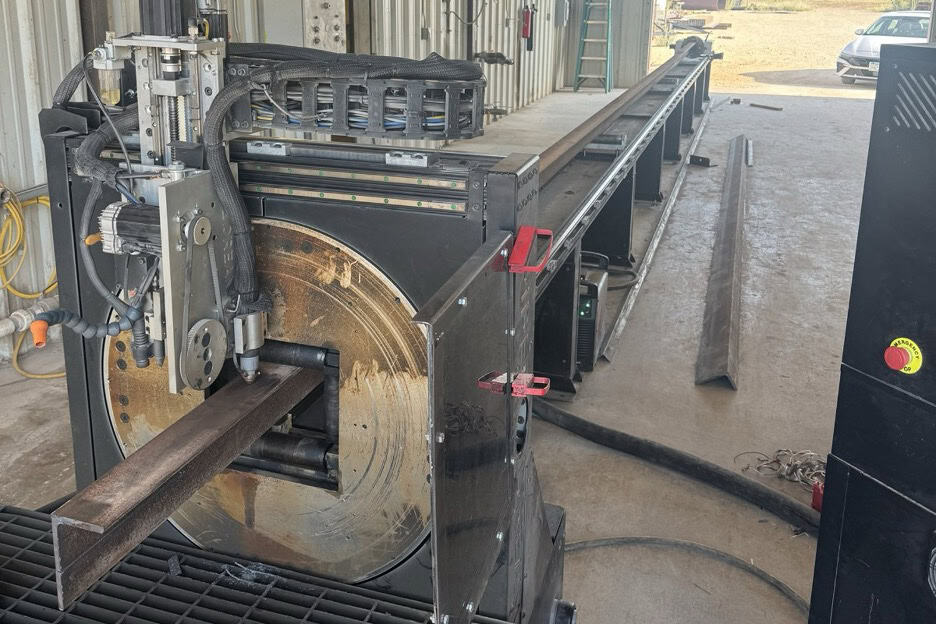
Most CNC tube cutting machines are sold on features. Software, changeover time, bevel, nesting, part libraries. All of that matters.
But none of it matters on a job the machine physically cannot hold. Capacity is the one spec that is not a preference. It is a wall.
Here is where that wall sits on entry-class machines, what sits on the other side of it, and how to tell which side your work is on.
Why Capacity Decides Everything Else
Every other spec is negotiable. A slower changeover costs you minutes. Weaker software costs you programming time. Those are annoyances you can work around.
A capacity ceiling is different. When a print comes in above it, you have three options: turn the job down, sub it out, or go back to a bandsaw, a torch, and a grinder.
None of those three make you money.
1. Know Where Entry-Class Machines Stop
Small-capacity tube cutters are built around light tube. Across the category, the ceilings land in a similar place:
- Round tube up to about 6 inches outside diameter
- Square and rectangular tube up to about 4 inches
- Angle and channel up to about 4 inches, often as a paid add-on rather than standard
- Material weight around 400 pounds
- Wall thickness commonly capped near 5/8 inch
For a shop building roll cages, handrail, light trailers, or ornamental work, that is a reasonable envelope. Those machines earn their keep.
The trouble starts when a structural job walks in the door.
2. Check the OD, Not the Nominal Size
Here is the trap that costs shops the most money, and almost nobody catches it before the purchase order goes out.
A 6-inch machine will not cut 6-inch pipe.
That is not a typo. Machine capacity is quoted in outside diameter. Schedule pipe is named by nominal size. Those two numbers are not the same, and on pipe they are never the same.
- 4 in. nominal is 4.500 in. OD
- 5 in. nominal is 5.563 in. OD
- 6 in. nominal is 6.625 in. OD
- 8 in. nominal is 8.625 in. OD
- 10 in. nominal is 10.750 in. OD
Six-inch schedule pipe measures 6.625 inches across. It does not fit a chuck that stops at 6.000, and no amount of software solves that.
So a shop that buys a 6-inch machine expecting to run 6-inch pipe is actually capped at 5-inch nominal. They lost a full pipe size to a rounding assumption nobody flagged on the quote.
This is worth stating plainly: the PD-10 is rated to run 10-inch schedule pipe. That means it clears 10.750 inches, not 10.000. The rating is the real one.
3. Understand What 10-Inch Capacity Actually Buys
The PD-10 was built for the other end of that range. It handles round, square, and rectangular tube up to 10 inches, including 10-inch schedule pipe, plus angle and channel up to 8 inches, at up to 800 pounds of material.
That is not a slightly bigger version of a small machine. It is a different class of work.
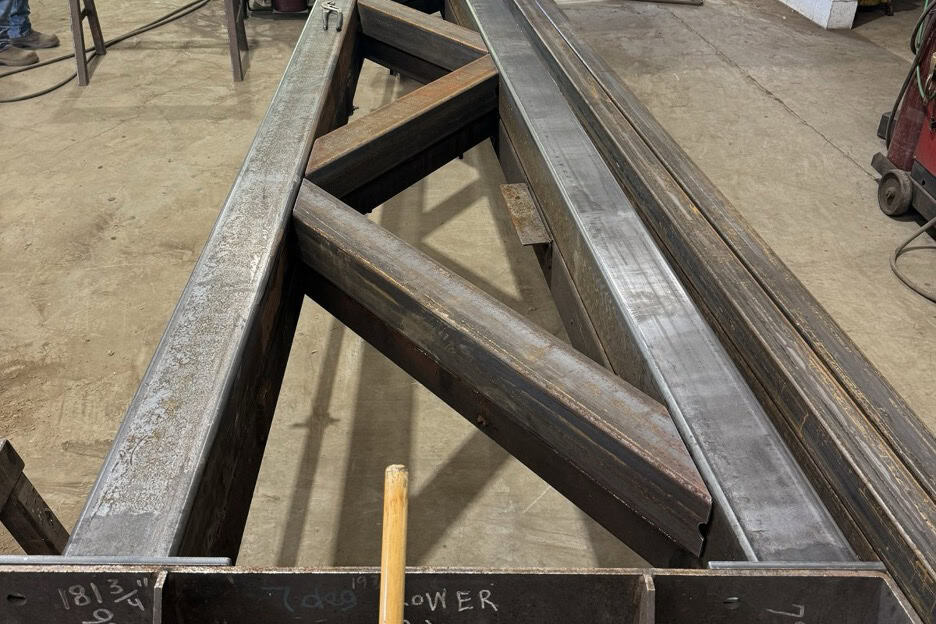
Ten-inch schedule pipe is structural column and heavy process piping. Eight-inch channel is frame rail, trailer chassis, equipment skids, and truss chord. None of it fits in a 6-inch chuck, and none of it is going to be handled by a 400-pound machine.
Capacity Is Additive, Not a Trade-Off
There is a common assumption that a large-capacity machine is a specialist — that buying one means giving up the light work in exchange for the heavy work.
It does not work that way. The PD-10 runs roll cage tube, handrail, light trailer frame, and ornamental work exactly like a small machine does. Those parts do not get harder to cut because the machine is also capable of holding a 10-inch column.
What the larger machine adds is the other end of the range. A shop with a small machine can do light work. A shop with a PD-10 can do light work and structural work on the same floor, with one control, one set of consumables, and one operator trained on one machine.
The honest exception is at the very bottom of the range. If a real share of your work is under an inch, a small machine still has the edge there.
4. Weight Is the Limit Nobody Checks
Diameter gets all the attention on a spec sheet. Weight is what actually stops you on the shop floor.
Schedule pipe is heavy. Eight-inch schedule 40 runs about 28.5 pounds per foot. Ten-inch schedule 40 runs about 40. A single 20-foot stick of 8-inch schedule 40 is roughly 570 pounds before you cut anything off it.
A machine rated at 400 pounds does not just cut that job slowly. It does not run it at all — the chuck, the rollers, and the drive were never designed to carry it.
This is why the 800-pound rating on the PD-10 matters as much as the 10-inch diameter. The two numbers have to arrive together or neither one is useful.
5. Treat Angle and Channel as Real Capability
Structural work is not all tube. Angle and channel show up on nearly every frame, skid, and truss, and they are awkward to cut well — the profile is open, the section is not symmetric, and the end cuts are usually compound.
On many small machines, angle and channel are an optional gate accessory limited to about 4 inches. On the PD-10 they are standard capability up to 8 inches, cut, beveled, and hole-punched in the same setup as everything else.
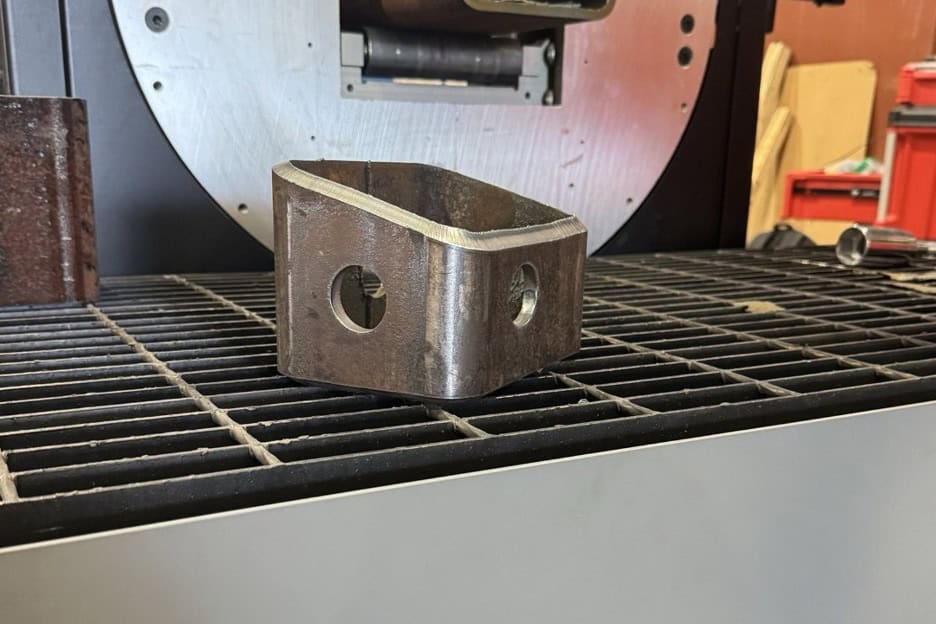
That difference shows up in your labor, not your spec sheet. A part that comes off the machine with its holes, its miter, and its bevel already in it does not get laid out by hand, drilled at a second station, or ground to fit.
Shop Floor Tip
Before you compare machines, pull your last twelve months of quotes and sort them by the largest section on the print. Include the jobs you lost and the ones you subbed out. That list, not the brochure, tells you where your capacity ceiling needs to be.
Length Is Not the Constraint
Material length is the first thing shops ask about and the last thing that actually limits them.
The PD-10 handles material up to 40 feet, the same as the small machines it gets compared against. Length is not where these machines separate.
Section size and weight are.
The Jobs You Never See
A capacity ceiling has a cost that never appears in any budget, because the jobs it blocks stop coming.
Turn down two structural jobs from a general contractor and you are no longer on the list for the next one. The estimator stops calling. The work goes to a shop that said yes, and it stays there.
Shops that buy at the top of their current range usually grow into the machine. Shops that buy at the middle of it tend to buy twice.
Side-by-Side Comparison
| Typical Entry-Class Machine | Pipe Dream PD-10 | |
| Round tube | Up to about 6 in. OD | 1 in. to 10 in. |
| Round schedule pipe | 5 in. nominal max (6 in. is 6.625 in. OD) | 10 in. nominal (10.750 in. OD) |
| Square and rectangular | Up to about 4 in. | Up to 10 in. |
| Angle and channel | Up to about 4 in., often an add-on | Up to 8 in., standard |
| Material weight | Around 400 lb | Up to 800 lb |
| Wall thickness | Commonly capped near 5/8 in. | Heavy wall and schedule pipe |
| Material length | Up to 40 ft. | Up to 40 ft. |
| Bevel | Limited or unavailable | Automated bevel cutting |
| Light tube work | Yes — it’s core strength | Yes — same work, same machine |
| Typical work | Roll cage, handrail, light trailer | Roll cage and handrail through structural, skids, chassis, process piping |
How to Size a Machine for Your Shop
Four questions settle it faster than any demo.
- What is the largest section I have quoted in the last year, including the jobs I did not win?
- If any of it is schedule pipe, what is the actual outside diameter, not the nominal size?
- How much does a full stick of my heaviest material actually weigh?
- How much angle and channel is on my prints, and what am I doing with it today?
If every answer lands under 6 inches, under 400 pounds, and mostly tube, a small machine will serve you well.
If any one of them lands above that line — or if you expect one of them to in the next few years — the larger machine is the only one that covers both ends. It does not cost you the light work to get the heavy work.
Final Thoughts
Small-capacity machines are not bad machines. They are correctly built for light tube work, and for a lot of shops that is exactly the job.
But the choice is not light work or heavy work. A large-capacity machine does both. The small machine only ever does one.
But capacity is the one spec you cannot work around after the purchase. Everything else on a machine can be learned, tuned, or lived with. A chuck that will not close on the material is simply the end of the conversation.
The PD-10 was built so that conversation does not end — round, square, and rectangular up to 10 inches including true 10-inch schedule pipe, angle and channel up to 8 inches, 800 pounds of material, and lengths to 40 feet, cut and beveled in one setup.
Ready to See the PD-10 in Action?
Send us the print that your current setup cannot handle. We will show you what it looks like coming off the machine.